Sea Kayaking Tours Vancouver Island, British Columbia, Canada
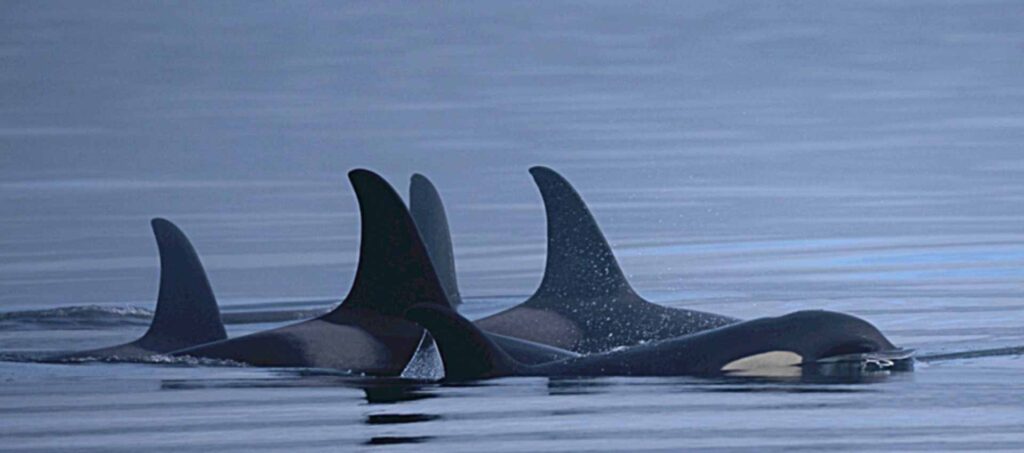
Welcome back to the Orca Camp blog. If you’ve spent any time near the ocean, watched a documentary, or been lucky enough to see these animals in the wild, you’ve likely heard the term “killer whale.” It’s a name that is widely used, instantly recognizable, and yet deeply misunderstood.
In this blog, I want to take you on a journey through history, language, and science to unpack where this name came from — and why so many people, including researchers and ocean lovers, now prefer to call them orcas.
Hundreds of years ago, long before modern marine biology, sailors and fishermen ruled the seas. Their understanding of marine life came not from textbooks, but from direct experience.
When early mariners encountered orcas, they were struck by their intelligence, coordination, and sheer power. Unlike many predators that hunt alone, orcas were seen working together in family groups, moving with strategy and purpose.
Most notably, sailors witnessed orcas hunting much larger whales — including gray whales and even young blue whales. To them, this was extraordinary. Here was a smaller whale taking down giants of the ocean.
In Spanish, they began referring to orcas as “asesina de ballenas,” which translates to “whale killer.” This description wasn’t meant to suggest that orcas were killers of humans — only that they killed other whales.
However, as this phrase moved into English, the meaning subtly shifted. Instead of being called “whale killers,” they became known as “killer whales.” Over time, that small change in wording completely altered how people perceived them.
The problem with the name “killer whale” is that it paints a picture of a ruthless, indiscriminate predator. In reality, orcas are far more complex, social, and intelligent than that.
Orcas live in tightly bonded family groups called pods, often led by older females. These matriarchs carry knowledge passed down through generations — where to hunt, when to travel, and how to survive.
They communicate using distinct vocal dialects, which vary between pods. In many ways, different orca populations have their own cultures, just like humans.
Some orcas specialize in hunting fish, others focus on seals or sea lions, and some do hunt other whales. But these behaviors are not random acts of violence — they are part of their natural role as apex predators in the marine ecosystem.
In fact, orcas are often compared to wolves on land: highly intelligent, cooperative hunters who rely on teamwork rather than brute force.
The word orca comes from the scientific name Orcinus orca, which has roots in Latin. Over time, “orca” has become the preferred term among scientists, conservationists, and many ocean advocates.
Using “orca” instead of “killer whale” helps shift the focus away from fear and toward understanding. It encourages people to see these animals not as monsters, but as highly evolved, emotionally complex beings that deserve respect.
As research on orcas has advanced, so has our appreciation for their complexity.
We now know that orcas form lifelong family bonds, mourn their dead, teach their young, and even pass down traditions. Their brains are highly developed, and their social structures are among the most sophisticated in the animal kingdom.
Perhaps most surprising to many people: despite their fearsome reputation, there has never been a documented fatal attack on a human by a wild orca. In most encounters, they are curious, calm, or simply uninterested in us.
This challenges the old narrative that painted them as dangerous killers, and instead reveals them as powerful, but selective and intelligent predators.
Language shapes how we see the world — and how we treat it.
When we call these animals “killer whales,” we frame them as something to fear. When we call them orcas, we open the door to curiosity, respect, and connection.
Neither name is technically wrong, but one carries far more negative weight than the other.
As our understanding of orcas continues to grow, so does our responsibility to represent them accurately and thoughtfully.
The next time you hear the words “killer whale,” remember this: the name is not a reflection of who these animals truly are — it’s a relic of history, translation, and misunderstanding.
Orcas are not villains of the sea. They are brilliant, social, and deeply connected creatures that play a vital role in the ocean’s ecosystem.
And the more we learn about them, the more there is to admire.
Thanks for being here and I look forward to connect soon!
By submitting this form, you are consenting to receive marketing emails from Grey Wolf Expeditions. You can unsubscribe at any time using the link found at the bottom our emails.
