

Where Do Northern Resident Orcas Go in the Winter?
The fascinating mystery of where our beloved Northern Resident killer whales travel when summer comes to an end.
By Sandra Zgela | Grey Wolf Expeditions | Orca Camp Vancouver Island
Every summer, something extraordinary happens along the northeastern coast of Vancouver Island.
The waters of Johnstone Strait, Blackfish Sound, and the surrounding channels come alive with the unmistakable blows, towering dorsal fins, and beautiful calls of Northern Resident killer whales.
For those of us fortunate enough to spend our summers in these waters, their arrival is something we look forward to year after year.
At Orca Camp, we’ve had the privilege of watching these remarkable families travel together, hunt for salmon, socialize, and occasionally visit the famous rubbing beaches.
But as autumn arrives, the days become shorter, the temperatures drop, and the busy summer waters grow quiet.
The orcas begin appearing less frequently.
And one question comes up again and again:
Where do the Northern Resident orcas go in the winter?
The answer is fascinating. And surprisingly, scientists are still piecing together parts of the mystery.
A Summer Home Along Vancouver Island
Northern Resident killer whales are among the most remarkable marine mammals living along British Columbia’s coast.
Unlike mammal-hunting Bigg’s killer whales, Northern Residents primarily feed on fish, especially Chinook salmon.
During the summer and early fall, many Northern Resident families regularly visit Johnstone Strait, Queen Charlotte Strait, and the surrounding waterways.
These areas offer important feeding opportunities as salmon move through the coastal waters toward their spawning rivers.
For the whales, this is also a place of family connections and traditions.
Northern Residents live in strong matrilineal family groups, where mothers, sons, daughters, and their descendants maintain lifelong relationships.
Some families are also known for their extraordinary beach-rubbing behaviour, gently gliding their bodies along smooth underwater pebbles at special locations passed down through generations.
These are some of the moments that make our summers at Orca Camp unforgettable.
But their summer gathering places are only part of a much larger story.
When Winter Arrives, the Orcas Don’t Simply Disappear
One of the biggest misconceptions about Northern Resident orcas is that they all migrate together to one specific winter destination.
They don’t.
Unlike humpback whales, which undertake long seasonal migrations between feeding and breeding grounds, Northern Resident orcas do not appear to follow one universal migration route.
Instead, different families move throughout their extensive coastal range, often following opportunities to find food.
Northern Residents have been documented from the waters of Washington State northward to southeastern Alaska.
Their important habitats include areas along Vancouver Island, Haida Gwaii, the central and northern British Columbia coast, and Dixon Entrance.
Some families may remain in familiar coastal regions, while others travel considerable distances.
And although sightings around Johnstone Strait become much less frequent during winter, that doesn’t mean the whales have left British Columbia.
In fact, research has shown that Northern Residents continue using several coastal habitats throughout the colder months.
They haven’t vanished. They’re simply spending more time in places where humans are less likely to see them.
Following the Salmon: The Key to Their Winter Movements
If there is one thing that shapes the lives of Northern Resident killer whales, it is salmon.
Chinook salmon are particularly important because of their size, high energy content, and availability in coastal waters throughout the year.
During summer and fall, salmon migrations help explain why so many orca families gather in certain areas.
But winter presents a different challenge.
Many salmon runs have ended, and the fish are distributed differently throughout the ocean.
As a result, Northern Residents must continue searching for reliable food sources across a much larger area.
Scientists believe prey availability plays a major role in determining where different families travel.
However, their exact winter diet and feeding patterns are still not fully understood.
This is one of the reasons protecting salmon populations is so important.
Healthy salmon populations don’t just support the orcas we see during summer.
They help sustain these families throughout the entire year.
Where Have Northern Residents Been Found During Winter?
Although many questions remain, decades of research have revealed several important pieces of the puzzle.
Northern Vancouver Island and Johnstone Strait
While sightings are far less common during winter, Northern Resident orcas are occasionally observed in the Johnstone Strait region outside the main summer season.
Some families continue to pass through these familiar waters even during the colder months.
The West Coast of Vancouver Island
Research has identified important habitat off southwestern Vancouver Island, including areas around Swiftsure and La Pérouse banks.
Acoustic monitoring has detected Northern Residents in these waters throughout the year, demonstrating that this coastline is much more than a summer destination.
Haida Gwaii and Dixon Entrance
The waters around northern Haida Gwaii and western Dixon Entrance are particularly significant.
Researchers have recorded Northern Resident calls here during every season, with important activity during late winter and spring.
These waters are also used by migrating Chinook salmon, making them valuable feeding habitat.
The Northern Strait of Georgia
Another fascinating discovery comes from underwater acoustic research in the northern Strait of Georgia.
Scientists have detected Northern Resident orcas during winter months, including around the waters near Texada Island.
These findings remind us that the whales may be using familiar coastal regions even when nobody is watching from the surface.
Southeastern Alaska and the Northern Coast
Northern Residents have also been documented as far north as Glacier Bay, Alaska.
Their wider range demonstrates just how connected the coastal ecosystems of British Columbia and southeastern Alaska truly are.
However, this does not mean every Northern Resident family travels to Alaska each winter.
Different pods have different movement patterns, and many details remain unknown.
How Do Scientists Follow Orcas Through the Winter?
Tracking killer whales during winter is far more challenging than observing them during summer.
Stormy seas, shorter daylight hours, remote coastlines, and fewer research vessels make traditional observations difficult.
Fortunately, researchers have another remarkable tool.
They listen.
Northern Resident killer whales are highly vocal animals.
Each family belongs to a vocal tradition with distinctive calls that researchers can recognize.
Underwater microphones, known as hydrophones, allow scientists to detect these calls even when the whales are nowhere to be seen.
Organizations such as OrcaLab, located near Hanson Island in the Johnstone Strait region, have spent decades listening to and documenting these extraordinary animals.
Through acoustic monitoring, photo identification, and other scientific research, we continue to learn more about where the whales travel, which families are present, and how they use their habitats throughout the year.
Every new recording adds another small piece to the puzzle.
And sometimes, the most exciting discoveries happen when researchers hear familiar voices in unexpected places.
Do Orca Families Stay Together During Winter?
One of the most beautiful things about Northern Resident orcas is their family structure.
Unlike many other marine mammals, Resident killer whales maintain lifelong relationships with their mothers and close maternal relatives.
Adult sons typically remain with their mothers throughout their lives, while daughters also stay connected to their maternal family groups.
These relationships continue through every season.
Although different families may travel together or separate from larger gatherings, their strong social bonds remain central to their lives.
Imagine travelling through the cold Pacific waters with the same family members you’ve known since birth.
For Northern Resident orcas, family isn’t just part of life.
Family is their way of life.
Why Their Winter Habitat Matters
Understanding where Northern Residents spend the winter is about much more than satisfying our curiosity.
It is essential to their long-term survival.
Protecting summer feeding areas is important, but these whales need healthy habitats and abundant food throughout the entire year.
Winter research helps scientists better understand where the orcas feed, which coastal areas are important, and where they may encounter threats such as vessel disturbance, underwater noise, pollution, and reduced salmon availability.
The more we learn about their movements, the better equipped we become to protect the places they depend on.
Because protecting Northern Resident killer whales means protecting their entire coastal home — not just the places where we see them during summer.
Until We Meet Again
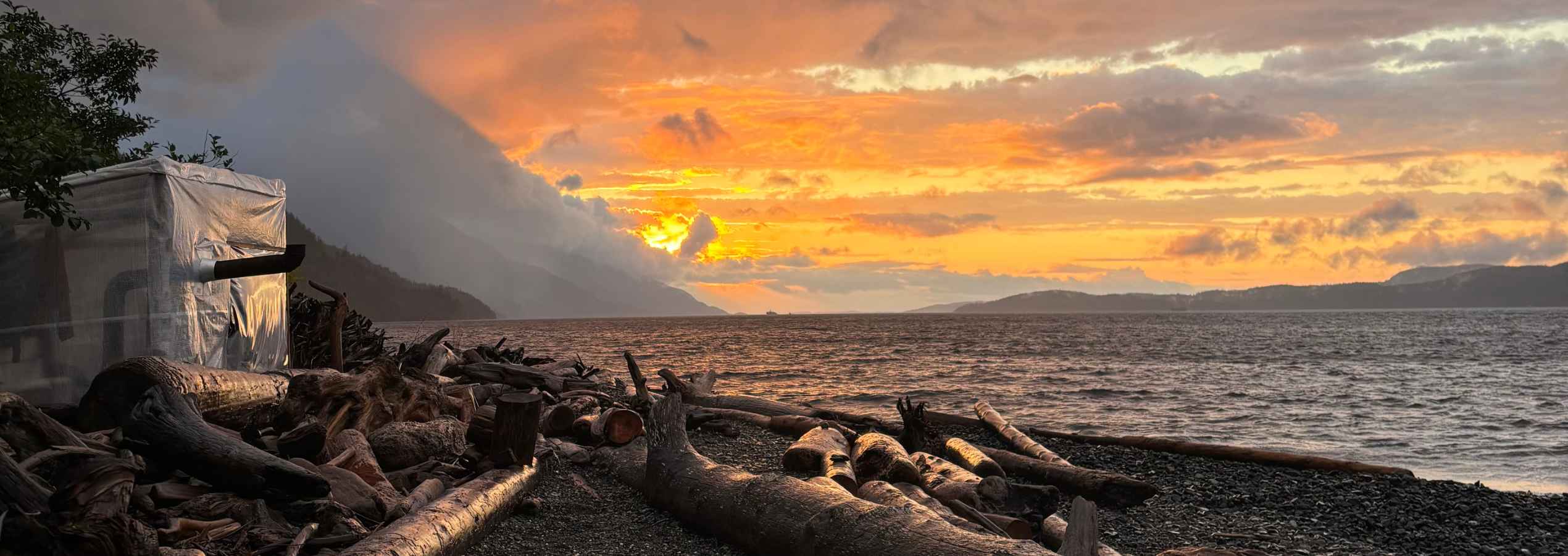
Every autumn, as our Orca Camp season comes to an end, the coastline begins to change.
The mornings become cooler. The forest settles into its winter rhythm. The waterways that were filled with boats and summer activity grow quiet.
Our camp returns to its natural state for the months ahead.
And somewhere out there, the Northern Resident families are continuing their journeys.
Perhaps they’re travelling along the remote coast of Haida Gwaii.
Perhaps they’re searching for Chinook in Alaska.
Or perhaps they’re moving through distant channels, communicating with the same familiar calls that have echoed through these waters for generations.
We may not know exactly where every family spends the winter.
But we know they’re out there.
Travelling together. Hunting together. Raising their young. Continuing the traditions that make them so extraordinary.
And when summer returns, we hope to welcome many of those familiar dorsal fins back into the waters surrounding Orca Camp.
Until then, the ocean is their home, and their journey continues.
With love and respect for the whales and the wild places they call home,
Sandra, Jesse & the Grey Wolf Expeditions Team
Orca Camp Vancouver Island | British Columbia, Canada
About Grey Wolf Expeditions
Grey Wolf Expeditions is a locally owned wilderness adventure company offering intimate, land-based whale-watching experiences at Orca Camp Vancouver Island.
Our multi-day adventures combine wildlife observation, kayaking, wilderness exploration, and a deep appreciation for the remarkable marine ecosystems of British Columbia’s coast.
We believe meaningful wildlife experiences begin with respect, education, and a commitment to protecting the natural world.
Learn more about our Orca Camp adventures at www.greywolfexpeditions.com.
