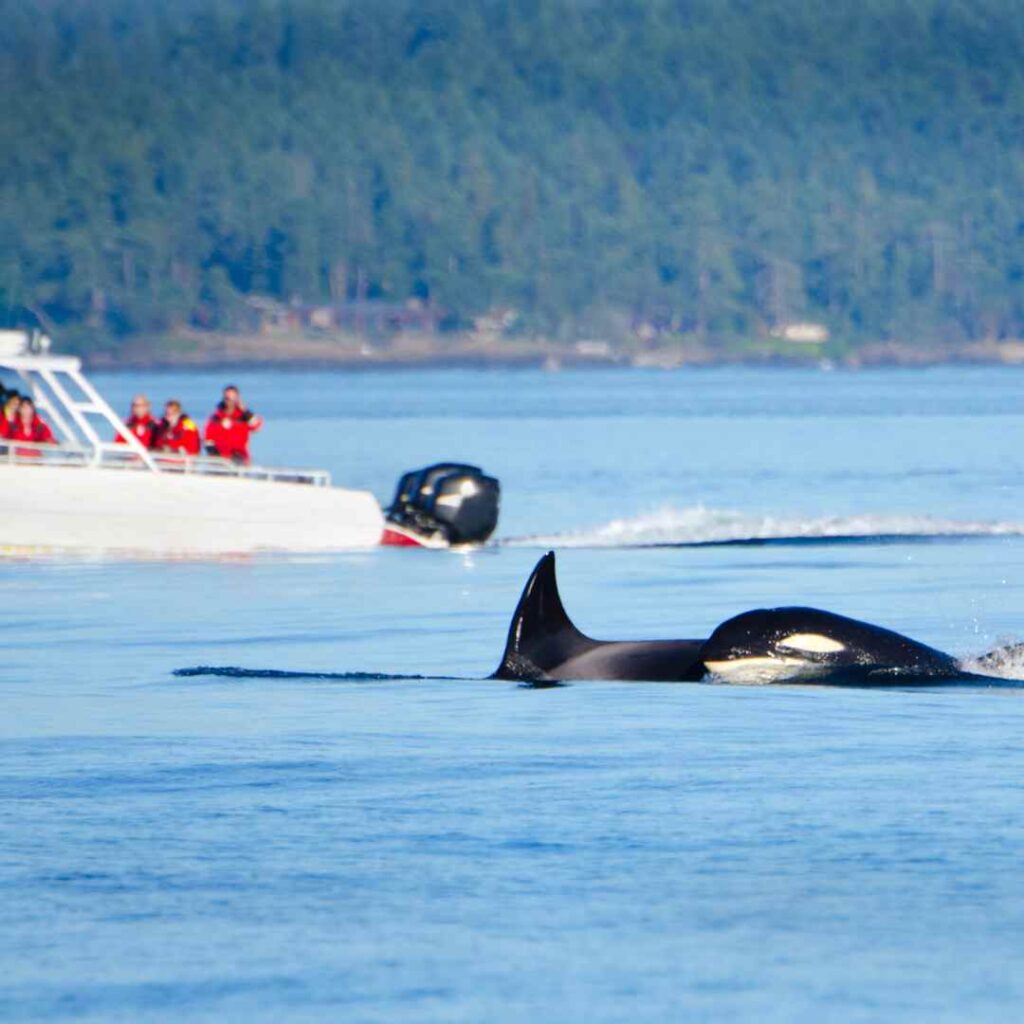


It’s Not What You Think..
Over the past few years, headlines have been hard to ignore.
“Killer whales sinking yachts.”
“Orcas attacking boats.”
“Revenge of the orcas.”
It’s dramatic. It’s clickable.
And it’s… largely misunderstood.
Let’s take a closer look at what’s actually happening—and why it matters.
Where Did This Happen?
Since around 2020, a small group of orcas has been interacting with sailboats off the coasts of Spain and Portugal, particularly near the Strait of Gibraltar.
These aren’t just any orcas.
They belong to a critically small and endangered population known as the Iberian orcas, with only about 35–40 individuals remaining.
So right away, this is not a global pattern.
It’s a localized behavior, observed in a very specific group.
What Are the Orcas Actually Doing?
Despite the headlines, orcas are not “attacking” boats in the way most people imagine.
They are:
- Approaching sailboats from behind
- Targeting the rudder (the steering blade)
- Nudging, pushing, and sometimes biting it
In some cases, the rudder breaks.
Without steering, boats can become disabled—and a few have eventually sunk.
But here’s the most important fact:
No humans have been harmed. Not one.
Why Are They Doing This?
This is where things get interesting.
Scientists are still studying the behavior, but three main explanations have emerged:
1. Curiosity & Play
Orcas are incredibly intelligent and interactive animals.
A moving rudder:
- Pushes back
- Vibrates
- Responds to pressure
To an orca, this can feel like a stimulating object—almost like a toy.
2. Learned Behavior (Orca Culture)
Researchers believe this behavior began with a few individuals—often referred to as the “Gladis” orcas—and then spread.
Why?
Because orcas don’t just live together…
they learn from each other.
This is something we see worldwide:
- Unique hunting techniques
- Distinct vocal dialects
- Cultural traditions passed through generations
Yes—orcas have culture.
3. A Possible Trigger Event
There’s also a theory that one orca may have had a negative encounter with a boat—such as a collision or entanglement.
But while this idea is often repeated in media…
It is not confirmed.
What the Headlines Got Wrong
The biggest misconception?
That orcas are becoming aggressive toward humans.
In reality:
- They are targeting a specific part of the boat
- They are not pursuing people
- They disengage after interaction
If these animals truly wanted to cause harm…
They could.
But they don’t.
What About Orcas on Vancouver Island?
This is where it’s important to bring it closer to home.
The orcas we encounter at Orca Camp—
the Northern Resident killer whales—are entirely different.
- Population: Over 341 individuals
- Diet: Primarily salmon (especially Chinook)
- Behavior: Highly structured, family-based, and predictable
They are known for:
- Lifelong maternal bonds
- Complex communication
- Cultural traditions like rubbing beaches
What they are not known for?
👉 Interacting with boats in this way.
In fact, Northern Residents tend to avoid vessels, especially with current distance regulations in place.
A Different Way to See This Story
So instead of asking…
“Why are orcas attacking boats?”
Try asking:
“What are they trying to understand?”
Because what we’re witnessing isn’t aggression.
It’s:
- Intelligence
- Curiosity
- Adaptation
- And possibly even… play
Final Thoughts
Orcas are not villains.
They are not unpredictable monsters.
They are complex, social, highly intelligent animals
living in a world we are only beginning to understand.
And sometimes…
they interact with it in ways that surprise us.
At Orca Camp, we always remind our guests:
You’re not here to see a performance.
You’re here to witness wildlife.
And whether that moment comes once… or many times…
It’s never something you forget.
Thinking About Experiencing Orcas in the Wild?
If you’re drawn to real, respectful, and immersive wildlife encounters—
we invite you to learn more about our land-based orca experiences on Vancouver Island.
Because once you understand them…
Everything changes.