

What about Shoulder Season?
When most people think about visiting orca territory, they immediately focus on peak salmon season. And while July through early September is closely tied to Chinook returns and resident feeding activity, there is another chapter of the season that deserves attention.
Shoulder season — June and late September — offers a very different experience.
The ocean feels quieter.
The pace softens.
The energy shifts.
In June, the coastline is waking up. The days are long, the light is fresh and bright, and marine life is active in many forms. While salmon numbers are still building, we often see a diversity of wildlife — humpbacks, porpoises, sea lions, bald eagles — and the entire ecosystem feels expansive and alive.
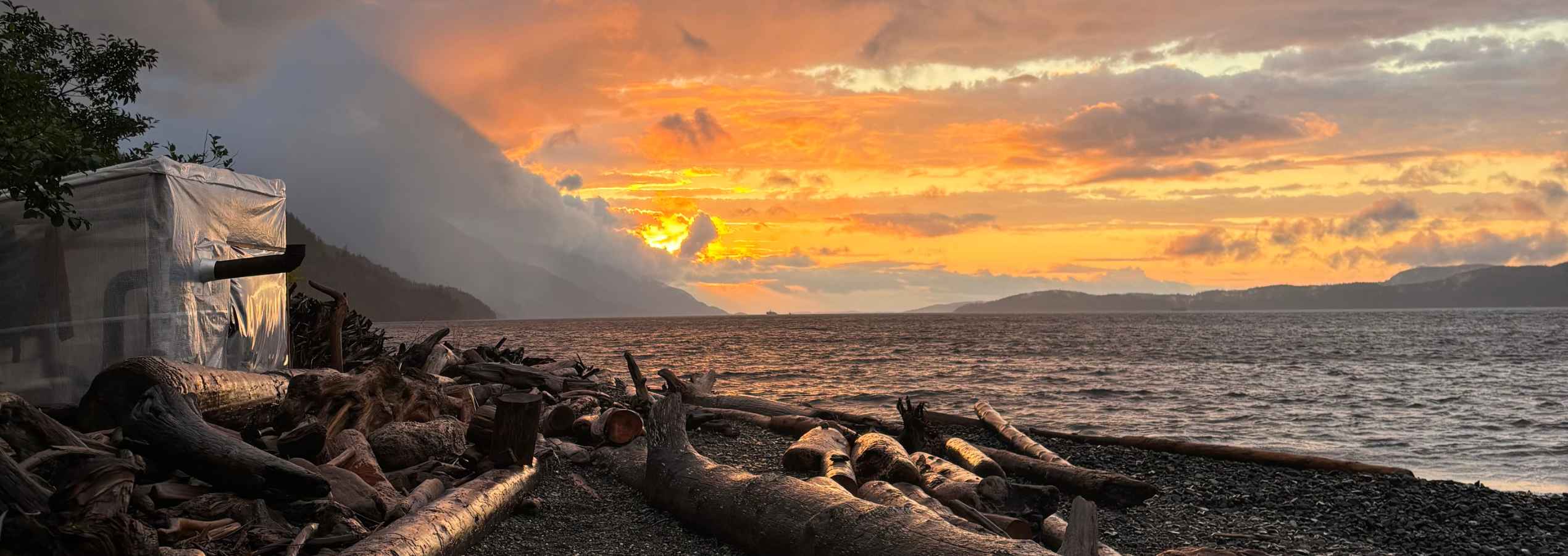
Late September carries a different mood. The summer rush has passed. The air cools slightly. The light turns golden and low. Salmon numbers begin to taper, and the rhythm of the coast adjusts accordingly. Wildlife encounters still happen — sometimes beautifully and unexpectedly — but the intensity of peak feeding season gives way to something more spacious.
Some guests are drawn to that quieter feel. Fewer boats. Less noise. More stillness. A deeper sense of immersion in place.
Others specifically want to align their visit with peak salmon movement and increased resident orca activity in July to early September. They prefer the heightened energy that comes when food is abundant and pods are actively foraging.
Neither approach is right or wrong.
It simply depends on the experience you are hoping for.
Are you seeking peak feeding season and the dynamic movement that comes with it? Or are you drawn to a slower, more contemplative ocean experience?
Understanding shoulder season allows you to choose intentionally — not just a date, but a feeling.
And in the wild, timing shapes everything.
The Pacific Salmon Connection
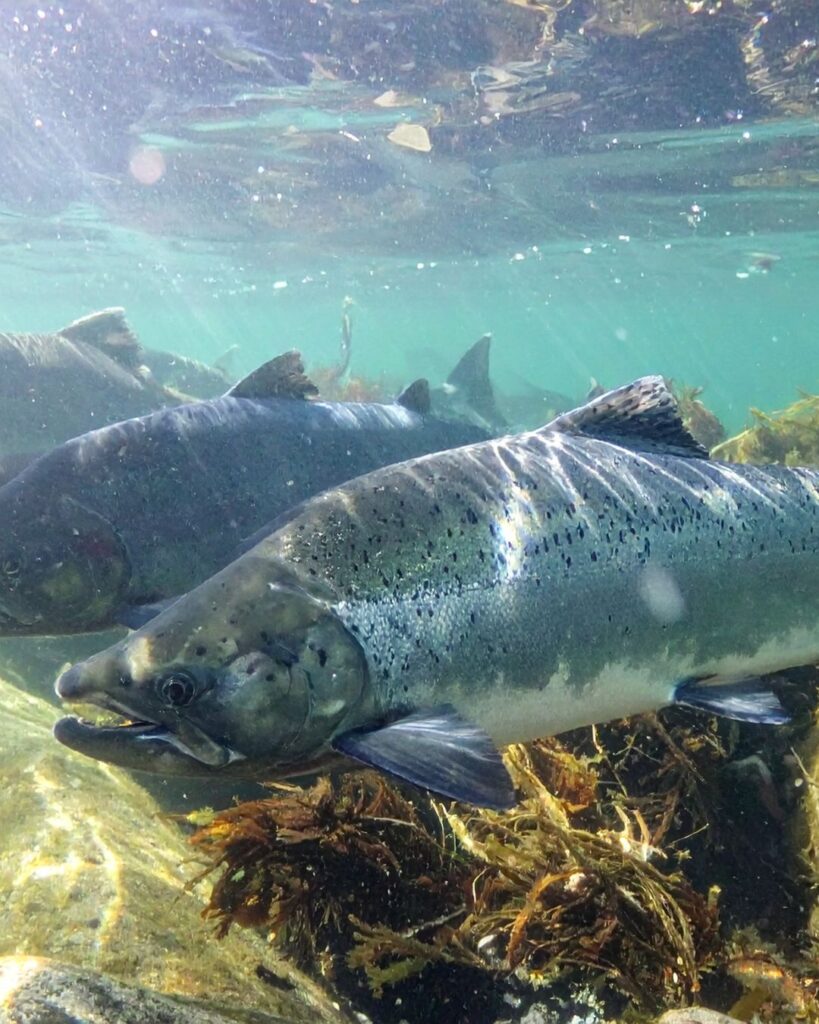
British Columbia is home to five species of Pacific salmon: Chinook, Coho, Sockeye, Pink, and Chum. While all are important to the marine ecosystem, the Northern Resident killer whales rely heavily on Chinook salmon. Chinook are larger, higher in fat content, and provide the caloric density these whales need to sustain themselves.
Salmon are anadromous fish. They hatch in freshwater rivers, migrate to the open ocean to grow, and then return — often years later — to their natal rivers to spawn. That return migration is what we refer to as the salmon run.
Along Vancouver Island, significant Chinook movement begins in July, builds strongly through August, and often continues into mid September. As salmon return to coastal channels and river systems, Northern Resident pods follow the food source. Their presence is directly connected to these seasonal fish movements.
This is why our July through early September dates are intentional. We position our guests during the time of year when salmon biomass is highest and feeding opportunities for residents are strongest. Aligning with that biological window gives our guests one of the highest probabilities in the world to glimpse a wild orca in its natural habitat.
We cannot guarantee wildlife. No ethical operator can. But we can align with ecology and experience— and that alignment matters.
Why Our Dates Matter
Our schedule is built around ecological timing. We choose our core season to overlap with strong salmon movement because that is when Northern Residents are most persistently traveling and feeding through our area.
It is not about chasing whales.
It is about understanding food systems, seasonal patterns, and respecting the rhythms of a wild coastline.
When salmon move, the ocean shifts.
When the ocean shifts, the residents follow.
And when we align ourselves with that cycle, we give our guests the greatest possible chance to witness one of the most extraordinary marine mammals on earth — not in captivity, not on a schedule, but in the wild, on their terms.
Timing shapes opportunity and increases your chances up to 80-95% to get to see a wild orca.
And in orca territory, timing is everything.
Thanks for being here and I will talk to you all soon.
Sandra Zgela